

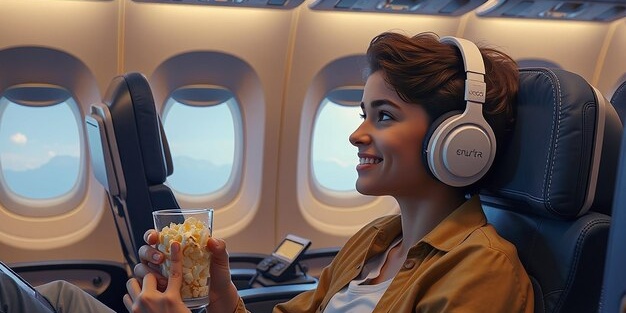
Air travel is no longer just about getting from point A to point B; it’s an experience. One of the most significant ways airlines have enhanced passenger experience is through in-flight entertainment. From the humble beginnings of printed newspapers to fully immersive digital systems, the story of airplane entertainment reflects both technological innovation and changing passenger expectations.
Early Days: Print Media and Simple Distractions
The history of airplane entertainment begins in the 1920s and 1930s, when air travel was a luxury accessible only to a privileged few. Airlines offered airplane entertainment in the form of magazines, newspapers, and cocktail service menus. These early efforts were designed to occupy passengers during relatively short flights, laying the groundwork for more structured inflight media.
By the 1930s and 1940s, some airlines began experimenting with onboard radios, allowing passengers to listen to music or news broadcasts during flights. While primitive, these steps marked the first attempts at delivering an organized in-flight entertainment experience.
The Movie Revolution: Cinematic Experiences at 30,000 Feet
The 1960s and 1970s saw a major shift. Airlines began screening movies on overhead projectors, often on a single shared screen for all passengers. This was the first era of cinematic airplane entertainment, giving passengers a communal viewing experience.
By the late 1970s, airlines like Pan Am and TWA experimented with video cassette players, allowing passengers to watch films in small groups or in premium cabins. This was an early form of inflight media that paved the way for personalized entertainment options.
Personal Screens and Video-On-Demand: The 1980s–1990s
The 1980s and 1990s brought a dramatic change to airplane entertainment with the introduction of seat-back screens and video-on-demand systems.
- Seat-back screens: Allowed passengers to select content individually, rather than watching what the airline programmed.
- Interactive games: Many airlines began including simple video games to engage younger travelers.
- Audio channels: Passengers could now listen to music playlists or audio books during flights.
This era marked the first wave of digital entertainment on airplanes, allowing a personalized experience and increasing passenger satisfaction. It also sparked competition among airlines to offer the best in-flight entertainment innovations, which became a major selling point for premium services.
The Digital Age: Streaming, Wi-Fi, and Connectivity
The 2000s and 2010s introduced a fully digital approach to inflight media. Airlines started integrating high-speed Wi-Fi and streaming platforms, enabling passengers to:
- Access streaming services on seat-back screens or personal devices.
- Watch live TV, including news, sports, and global events.
- Enjoy interactive features like destination guides, language learning tools, or meditation apps.
Examples of best in-flight entertainment innovations include Emirates’ ICE system, which offers thousands of on-demand movies and live TV channels, and Delta’s seat-back Wi-Fi that lets passengers stream Netflix, Hulu, and more. Today, digital entertainment on airplanes combines content variety, connectivity, and interactivity to make flights more enjoyable than ever.
In-Flight Entertainment for All Passengers
Modern airplane entertainment is no longer a luxury. Airlines are designing systems for:
- Families: Kid-friendly cartoons, educational content, and games.
- Business travelers: Productivity tools, news updates, and business podcasts.
- Leisure travelers: On-demand movies, TV shows, and curated music playlists.
Inflight media now adapts to passenger preferences, often using AI algorithms to recommend content based on viewing history or travel profile.
The Future: Immersive and Interactive Experiences
Looking ahead, the evolution of airplane entertainment is poised to include:
- Virtual reality (VR) and augmented reality (AR) experiences for immersive travel entertainment.
- AI-driven personalized recommendations, curating content to match mood, destination, or flight duration.
- Gamified and social experiences, allowing passengers to play games with others on the same flight or share entertainment experiences in real-time.
- Sustainability-conscious media, such as streaming lightweight content to reduce energy use onboard.
The history of airplane entertainment shows a clear trend: flights are evolving from passive travel to active, engaging experiences. The focus is no longer just on reaching the destination, but on making every hour in the sky enjoyable.